

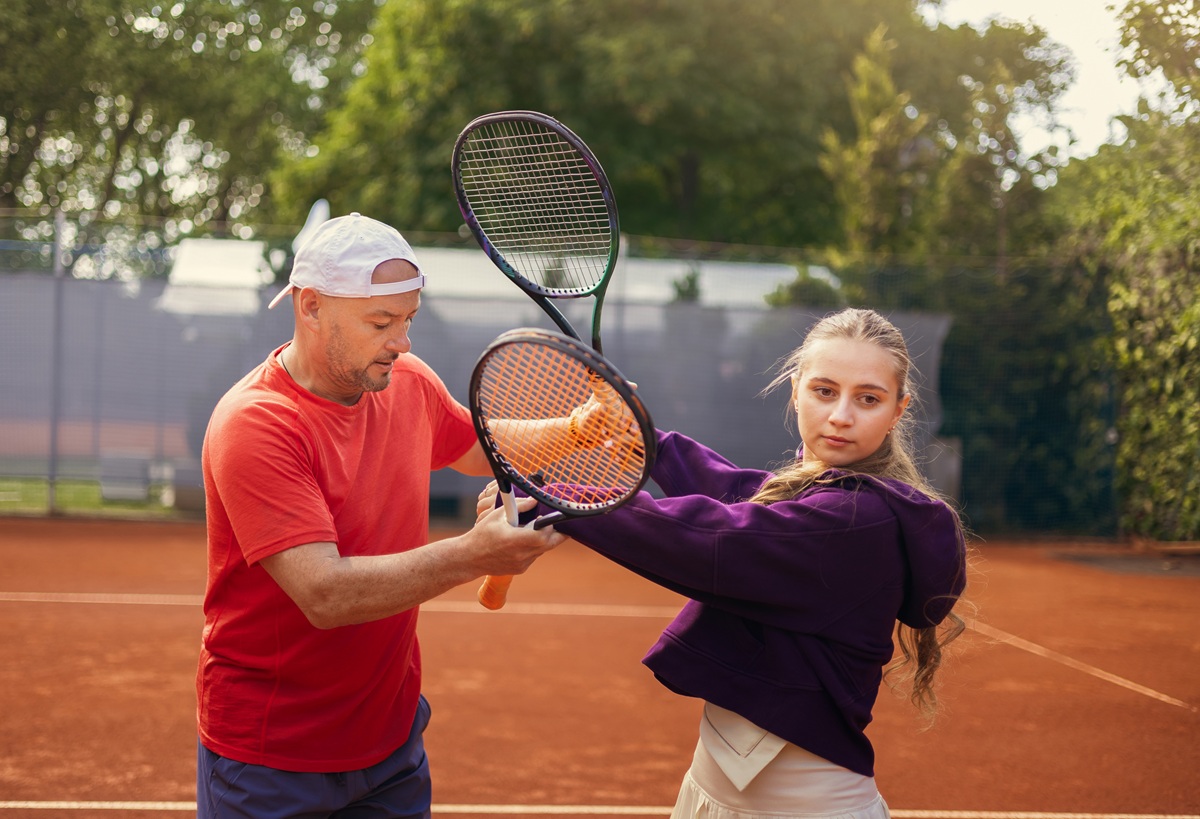
Tennis is one of those games that can be social, enjoyable, and quite challenging. However, after a long break from private tennis lessons or after playing for the first time, if you push yourself too hard or too fast, you could end up with an overuse injury. Tennis elbow is a painful overuse injury on the outer side of your elbow. It happens when you use your forearm muscles too much, making tiny tears in the tendon where it joins the bones. People can develop it not only from playing tennis but also from repeated twisting, typing, or gripping.
This injury is named after tennis because it was widely documented and associated with tennis players. Racquet sports place heavy stress on the forearm tendon attached to the outer elbow. The first step in learning how to prevent tennis elbow is understanding how your body responds to repeated sports loads. In this blog, we will break down tennis elbow and other racquet injuries, the key reasons they happen, and how you can prevent them.
What Tennis Elbow Is (and Isn’t)
Although it’s called ‘tennis elbow,’ it doesn’t affect only people who play tennis. It is often referred to as lateral epicondylitis but is better known as lateral elbow tendinopathy. It is related to the tendons on the outside of the forearm that attach to the outside of the elbow.
The problem typically occurs when those tissues are subjected to repetitive loading they cannot physically tolerate. Pain around the outside of the elbow may be caused by repeated gripping, extension of the wrist, and impact of the racquet. This discomfort can also spread down the forearm to the wrist, and grip strength may be lost.
So, what causes tennis elbow? Often there are multiple causes. The total load can be increased by a sudden increase in court time, excessive gripping, and poor stroke form. That is why tennis elbow should be treated as a load-management issue, not just an elbow issue.
Why It Strikes Beginners and Comeback Players Hardest
Beginner and returning tennis players often face the same issue. Beginners lack the right form, often hitting the ball late or off center. This puts extra stress on the forearm tendon instead of using the big body muscles. For individuals returning to tennis after a break, they may expect to play at their old skill level, but their forearm and shoulder might not be ready for several hours of hitting every week.
Injuries happen when you play multiple matches and practice sessions too soon, overwhelming unprepared muscles and tendons. Your tendons and joints require weeks of progressive loading to handle repetitive racquet swings safely. The same principle applies to wrist and shoulder problems. It doesn’t mean stopping play, but gradually building your strength capacity.
The Four-Part Prevention System
Preventing tennis elbow or racquet injury does not mean you should avoid playing tennis. You should slowly let your body adapt to the challenges and demands of the sport. Here is a four-part prevention plan that lets you enjoy the sport with less risk of overuse problems.
Load Management—The 10% Ramp Rule
The most common mistake beginners and professionals returning to tennis make is increasing the playing time very quickly. You may feel tempted to play for a few hours, but your muscles and tendons may not be prepared for this much repetitive hitting. The 10% ramp rule means increasing the overall tennis workload by just 10% from one week to the next. Base your starting point on your current fitness level, previous injuries, and how your body responds.
For instance, if you can play comfortably for 60 min in one week, you can increase it to roughly 65-70 minutes the next week instead of jumping straight to two hours. Your workload should also include serving practice, ball machine sessions, strength training, match intensity, and how many days you play. At Woodside, our Adult 101 is designed for returning and new players; it provides a more structured way to rebuild your tennis routine.
Prehab—Forearm and Rotator Work That’s Proven
Strengthening the muscles that support your stroke can help your body handle repeated court activity, which is why it’s called prehab. It lets you build strength before an injury develops. Forearm strength is crucial because it controls your grip and stabilizes the racquet.
Exercises like wrist extensions, wrist curls, forearm rotation, and controlled gripping help strengthen your forearms. Your shoulder also needs attention because tennis demands a lot of overhead motion from the rotator cuff. One well-supported method for elbow health is eccentric strengthening: slowly lowering the wrist from an extended position into flexion while controlling the resistance.
Technique—What a Coach’s Eye Catches
Your technique directly affects how much strain lands on your elbow, and small flaws are hard to spot during play, but a coach usually catches them fast. Late contact is a common culprit; hitting the ball too close to your body forces your arm to overcompensate. Excess wrist snap, especially on the backhand, adds further strain.
Gripping too tightly, often from nerves or trying to muscle a shot, only adds tension. Efficient tennis uses your whole body, footwork, early prep, and hip and trunk rotation, so your arm isn’t doing all the work alone. A professional coach can spot details that are difficult to notice while playing.
Equipment—Grip Size and Strings
The wrong equipment can add unnecessary stress, so choose a racquet grip size that leaves a small gap when your fingers wrap around it. A small grip makes the squeeze harder, and a grip that’s too large, which makes control harder; both can affect your forearm. Your racquet should match your skill level and swing style.
Use a softer multifilament string or lower your tension to absorb shock. If your elbow pain keeps showing up, it’s time to have both your equipment and your technique checked. Look for racquet weight, stiffness, string type, tension, playing style, and skill level. Ask a qualified coach to assess your complete setup.
The 8-Minute Pre-Match Warm-Up

A good warm-up is crucial before playing any sport. It should raise your body temperature and prepare you for the movements you’ll use. Here is an 8-minute sequence to try:
Minutes 1-2: Light jogging or side steps and brisk walking.
Minutes 3-4: Arm circles, shoulder rolls, trunk rotations, and light wrist movements.
Minutes 5-6: Dynamic lunge, lateral step, and controlled bodyweight squats.
Minutes 7–8: Mini-tennis, gradually moving further back and increasing swing speed.
Begin with controlled strokes for full-power serves and hard groundstrokes. A gradual training build-up, warm-up, and proper technique minimize the risk of re-injury.
Pain vs. Soreness: Red Flags That Mean Get It Checked
Not all pain signals injury. Your muscles may be sore or tired after a new exercise. Pain requires more attention when it is sharp, persistent, worsening, or starts interfering with everyday activities. If the pain persists despite reduced activity, stop and seek a doctor’s advice. If you experience any of the following, get it professionally checked:
- The pain is very intense or is increasing.
- You have difficulty moving the arm.
- Swelling and/or discoloration occurs.
- Pain interferes with sleep or with normal activities.
- You feel numbness or tingling.
- An unexpected injury, snap, or loss of function.
- Appropriate self-care does not alleviate symptoms.
If pain doesn’t go away, contact a healthcare provider. Self-diagnosis is not always accurate, as tennis elbow may present with symptoms similar to other elbow, wrist, or nerve issues.
The Support Team: Coaching and Recovery
Prevention works best with a comprehensive approach. The right professionals and coaches can identify unnecessary movement patterns that place excessive load on the elbow. A technique check is especially useful after a period away from the court. Similarly, recovery matters just as much as time on the court.
Rest days, mobility work, and simple self-care between sessions give your tendons the chance to adapt to your training load, helping you feel ready for your next session rather than carrying fatigue into it. Injuries like tennis elbow don’t happen overnight; they build up over weeks of small strain nobody really notices until it hurts. Woodside brings these pieces together under one club experience, with tennis professionals, fitness resources, and therapies available through the club and spa.
FAQs:
- What causes tennis elbow, really?
Typically, it is an imbalance between the load placed on the forearm and the tendon’s ability to handle it. Factors such as repetitive gripping, intense wrist movement, technique problems, and sudden changes in play and equipment can cause tennis elbow.
- Why do beginners and returning players get it most?
They may increase playing time faster than their muscles and tendons can keep up. The sudden jump from little activity to frequent hitting is a common reason for overuse problems.
- Do forearm exercises actually prevent it?
They can help strengthen and build capacity, but no exercise can guarantee prevention. Progressive strengthening is strongly recommended as a component of the treatment of lateral elbow tendinopathy.
- What technique flaws put stress on the elbow?
Late contact, excessive wrist action, poor body positioning, and gripping the racquet too tightly can increase forearm demands. Woodside Professional coaches provide immediate feedback and corrective drills to refine your technique.
- How should adults ramp up play volume safely?
Begin below your maximum and gradually increase. The 10% per week guideline helps beginners. Avoid scheduling too many hard, tiring play sessions back-to-back.
Outsmart Injury: Keep Your Body Court-Ready at Woodside
The most effective way to stay on the tennis court is not to wait until you experience pain in your elbow. Give your body the time and structure it needs to keep up with the game. Remember that daily fatigue is different from recurring pain. Book your tennis session at Woodside and get started. Our professional tennis coach pays close attention to your form and technique so you don’t put additional stress on your arm. We offer tennis lessons for players of all levels. Whether you’re new to tennis or returning after time away, Adult 101 helps you build your game consistently and comfortably. Ready to get on the court? Contact us to choose your tennis program, schedule your session, and enroll in professional tennis coaching today.